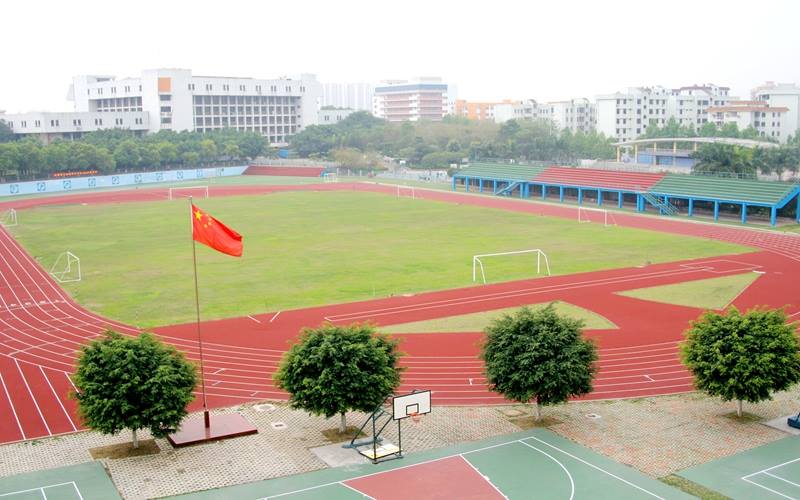
A flagship industry college at Dongguan University of Technology, uniting mainland and Taiwan academic strengths to cultivate high-quality, application-oriented innovative talent.
Established in 2015 as the first Guangdong–Taiwan higher education cooperation project approved by the Guangdong Provincial Department of Education — with its own independent enrollment code.
The College is jointly operated by Dongguan University of Technology, the Dongguan Taiwan Businessmen’s Yumiao Education Foundation, and partner universities in Taiwan. It offers undergraduate programs in Intelligent Manufacturing Engineering, Computer Science and Technology, Industrial Design, and Economics and Finance.
By leveraging the advantages of cross-strait higher education cooperation, the College drives institutional innovation in cultivating emerging engineering talent. Through a strong alliance of advantageous disciplines and programs from universities on both sides, it has established a “3+1” cooperation and exchange model and systematically advances the “three-pronged” strategic deployment of education, technology, and talent.
Situated at the intersection of the Greater Bay Area (the Guangzhou–Shenzhen Economic Corridor) — Guangdong’s advanced manufacturing hub and a global benchmark for development — the College aligns itself with the global modern industrial system, highlighting deep industry-education integration, comprehensive school-enterprise collaboration, and multi-party collaborative innovation.
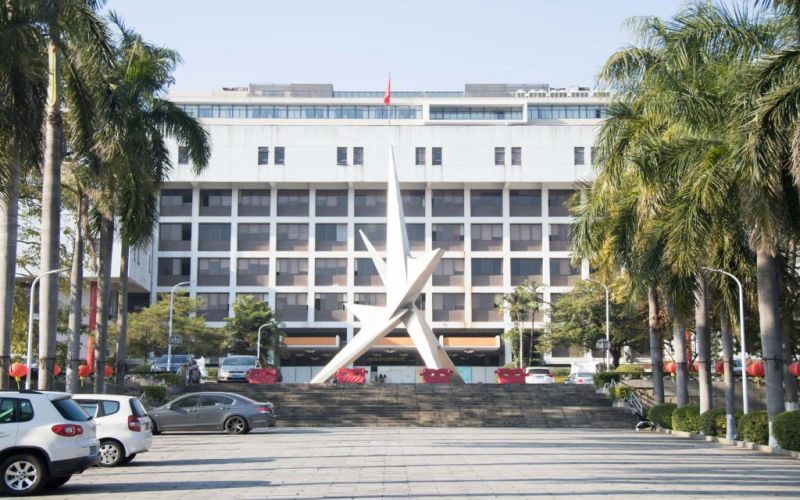
Located within the campus of Dongguan University of Technology · Guangdong Provincial Demonstration Modern Industry College · Flagship industry college of DGUT.
Integrating and utilizing high-quality cross-strait educational resources for virtue cultivation, cooperative models, and engineering accreditation.
“2+1+1” and “1+N+N” models — university-university cooperation with “dual-campus” resources across the strait.
Taiwanese faculty, DGUT faculty, and industry mentors lead teaching, management, and industry-academia-research work.
Cultivating a spirit of responsibility and global vision, with cross-disciplinary and practical abilities.
Enhancing innovation and entrepreneurship abilities through innovation education and learning by competition.
Promoting personal growth based on characteristics and potential planning, fostering talents who are responsible, eager to learn, and dare to excel.
First Guangdong–Taiwan higher education cooperation program approved by the Guangdong Provincial Department of Education; first cohort enrolled.
Approved as a Guangdong Provincial Demonstration Modern Industry College.
A key modern industry college in DGUT’s high-level science-and-engineering university development, enrolling 1,000+ students.
A leadership team committed to teaching excellence, Party building, student affairs, and deep industry-academia collaboration.
Oversees all administrative and academic affairs of the College, responsible for teaching, research, and overall development. Liaises with the College Office and the Alumni Association.
Presides over the overall Party affairs of the College, responsible for Party affairs and ideological work. Liaises with the Women’s Committee and the Branch Trade Union.
In charge of teaching, practical teaching, industry-academia collaboration, research, and discipline development. Liaises with the Academic Affairs Office and the Experimental Center.
Assists the Party Secretary in daily Party work and is in charge of student affairs. Liaises with the Student Affairs Office, the Youth League Committee, and the Student Union.
Four undergraduate programs in five directions, delivered through the “3+1” and “1+N” cooperative education models — three years on the mainland with an optional voluntary fourth year at a partner university in Taiwan.
Based in Dongguan, aligned with the “Guangdong Province Manufacturing High-Quality Development 14th Five-Year Plan” and the national “Made in China 2025” strategy. Cultivates talent spanning mechanical design, robot control, information acquisition, and intelligent production-line operation — high-quality applied innovative talent with teamwork and entrepreneurship awareness.
Including Lunghwa University of Science and Technology and Chihlee University of Technology for exchange studies.
National Taiwan University of Science and Technology, National Taipei University of Technology, Donghua University, Tamkang University, Fu Jen Catholic University, Tatung University, and more than twenty other institutions.
Delta Electronics Power (Dongguan), Dongguan Shini Electric Heating Machinery, Beiliku Metal Products, Sisuo Connector, SMC Automation, Quanchuang Optoelectronics, Yide Electronic Technology, Shenzhen Moore Lab, Beijing Jingdiao Group, Shun De Machinery, and many other enterprises.
Precision manufacturing, intelligent manufacturing, semiconductor industry, automation equipment manufacturing, artificial intelligence industry, new energy vehicle production/maintenance, patent invention firms, and other fields.
Students must meet moral-education goals, pass university physical-education standards, complete required and elective credits with specified practice components (total 165 credits: 149 theoretical credits with in-class practice and 16 credits of intensive practice), and earn required extracurricular credits to graduate.
Centered on the “AI + Industrial Design” transformation of the Greater Bay Area. Cultivates well-rounded talent with solid industrial-design theory, innovation-driven AI technologies, and cross-disciplinary skills for future smart design — with a global perspective and a sense of social and environmental responsibility.
National Taiwan University of Science and Technology, National Taipei University of Technology, Donghua University, Tamkang University, Fu Jen Catholic University, Tatung University, and more than twenty other institutions.
Guangdong Jiyang Vision Technology, Delta Electronics Power (Dongguan), Shun De Machinery, Guangzhou Fan’er Aroma Daily Products, Dongguan Honglin Vehicle, Dongguan Shini Electric Heating Machinery, Beiliku Metal Products, Sisuo Connector, SMC Automation, Quanchuang Optoelectronics, Yide Electronic Technology, and many other enterprises.
Product R&D, visual-communication design, and environmental design — including mechanical design, structural design, product design, packaging design, advertising design, exhibition design, information communication, and yacht styling design.
Total 164 credits (147 theoretical with in-class practice and 17 credits of intensive practice), plus required extracurricular credits. Graduates apply design fundamentals, execute the industrial-design process, use software/hardware tools (CAD, SolidWorks, Rhinoceros 3D; 3D printing, laser engraving, rapid prototyping), understand markets and ergonomics, and uphold innovation, sustainability, and lifelong learning.
Cross-disciplinary integration of “New Engineering + New Liberal Arts,” combining digital creativity with e-commerce practice. Offered in two directions: Multimedia Design and Cross-border E-commerce.
Objectives: professional fundamentals and innovation; self-challenge and lifelong learning; social and humanistic literacy; team spirit and international vision.
Core courses: Web Front-end Development, Programming, Digital Image Processing, Object-Oriented Programming, Data Structures & Algorithms, Digital Modeling, Multimedia Game Engine Development, Database Principles, Multimedia Design & Production, AI-Enabled Game Design, Digital Creation & Integration.
Faculty: 8 doctorate/senior-title · 42 Taiwanese partner · 41 industry mentors.
Career paths: film and animation (animation, video, micro-film, cultural-creative industries) and game multimedia (VR/AR, virtual scene design, game design, game-engine development).
Objectives: well-rounded talent mastering software engineering, AI, and business-information management for intelligent-internet systems, with an international perspective and innovative awareness.
Core courses: Java Application Development, Data Structures & Algorithms, Computer Networks, Database Principles, Operating Systems, Computer Organization, Python & Big Data Analysis, Machine Learning, Deep Learning, E-commerce Operation and Practice.
Faculty: 8 doctorate/senior-title · 43 Taiwanese partner · 45 industry mentors.
Career paths: cross-border e-commerce, intelligent internet, and intelligent manufacturing in system development, technical management, AI R&D, intelligent-system development, data analysis, and AI-model operations.
National Taiwan University of Science and Technology, National Taipei University of Technology, Donghua University, Lunghwa University of Science and Technology, Chihlee University of Technology, Tatung University, and more than twenty other institutions.
Guangzhou Di’ao Information Technology, Guangdong Yingda Sixun Intelligent Manufacturing, Dongguan Suche Testing Equipment, Shenzhen Ou’ai Intelligent Technology, Jiyang Vision, Delta Electronics, Shun De Machinery, Fan’er Aroma, Honglin Vehicle, and many other enterprises.
Multimedia Design: 164 credits (148 theoretical with in-class practice, 16 intensive). Cross-border E-commerce: 163 credits (147 theoretical with in-class practice, 16 intensive), plus required extracurricular credits. Both follow 12 general engineering-education graduation standards covering engineering knowledge, problem analysis, design/development, research, modern tools, engineering & society, environment & sustainability, professional standards, individual & team, communication, project management, and lifelong learning.
Oriented toward the Greater Bay Area, covering three areas — Finance & Environment, Finance & Technology, and Finance & Wealth Management. Students master data analysis, blockchain, and AI, understand international financial-market rules, and work across banking, securities, insurance, and corporate finance. Historically hosted the “Guangdong–Taiwan Dongguan Financial Cup” innovation competition (2015).
National Taiwan University of Science and Technology, National Taipei University of Technology, Chihlee University of Technology, Yuan Ze University, Ming Chuan University, Fu Jen Catholic University, Tatung University, Chung Yuan Christian University, and more than twenty other institutions.
E.SUN Bank, Industrial and Commercial Bank of China, Agricultural Bank of China, China Everbright Bank, Industrial Bank, China Construction Bank, Guosen Securities, Dongguan Securities, China Guangfa Bank, CITIC Securities.
Banking, securities, insurance, trust investments, program trading, quantitative investment, and government agencies — as Project Manager, ESG Investment Manager/Specialist, Risk Manager, FinTech Analyst, Big Data Analyst, Quantitative Strategy Trader, Blockchain Developer, Financial/Securities Professional, and more.
Total 163 credits (147 theoretical with in-class practice, 16 intensive), plus required extracurricular credits. Standards cover engineering & management knowledge, problem exploration and analysis, design/development solutions, scientific research, modern management tools, FinTech development and international alignment, financial-environment development, professional ethics, individual & teamwork, communication & coordination, project management, and lifelong learning.
A comprehensive experimental infrastructure supporting hands-on, project-driven learning across intelligent manufacturing, industrial design, and computer science.
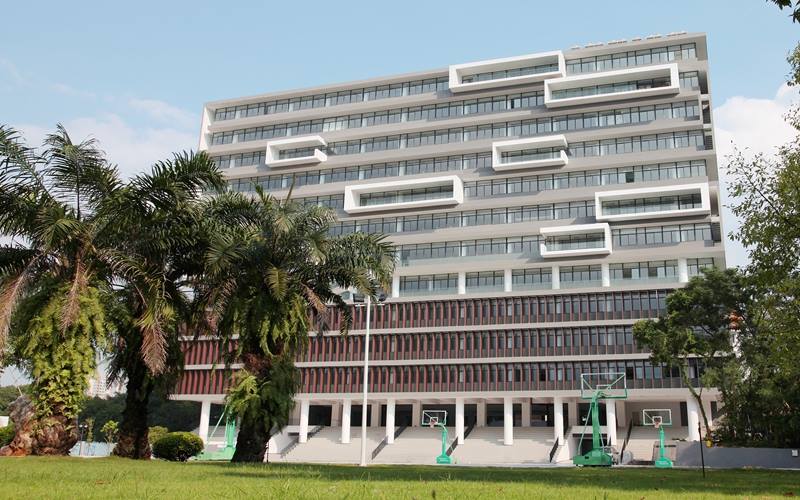
The College operates 19 laboratories in two categories — innovation & entrepreneurship labs and experimental teaching labs.
Intelligent Manufacturing Engineering Department Laboratories (including the Optoelectronics Physics Research Group) support advanced research alongside these facilities.
For the latest admission information and official announcements, please contact the admissions office or refer to the official enrolment guide published by the university.
Detailed admission plans, programs and tuition fees are published by the university admissions office and may be updated from year to year — please always refer to the official release.
View Full Admission DetailsLocated within the campus of Dongguan University of Technology, with specialized facilities, dedicated support for Taiwanese students, and a lively calendar of cross-strait activities.